Torrens Facility Management: Keeping South Australian Buildings Quietly Working
If you only notice facilities management when something breaks, you’re not alone. Most portfolios run “fine” right up until a chiller trips on a 38°C day, a fire panel throws a fault at 2 a.m., or a tenant decides the air feels “stale” and suddenly it’s your problem.
Torrens Facility Management (Torrens FM) is built around preventing that kind of drama: proactive maintenance, real-time monitoring, and communication that’s actually useful instead of fluffy. The goal isn’t heroics. It’s boring reliability.
One-line truth: uptime is a culture, not a slogan.
Bold opinion: reactive maintenance is just expensive procrastination
I’ve seen organisations treat breakdowns as “bad luck.” It isn’t. It’s usually deferred maintenance with a nicer label.
The difference with Torrens FM is the bias toward early signals, small temperature drifts, abnormal run-hours, recurring callouts from one zone, minor leaks that become major damage if ignored. That’s not romantic work, but it’s what keeps South Australian properties stable across summer peaks, wet winters, and those awkward shoulder seasons when HVAC systems get abused.
Why South Australian portfolios lean toward Torrens Facility Management
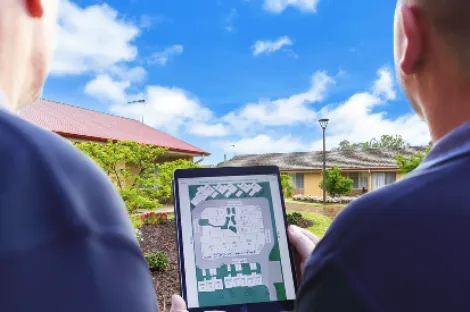
This part can sound like marketing until you’ve had to explain unplanned downtime to an executive team.
South Australian Properties Trust-aligned standards (governance, compliance discipline, consistent processes) matter because they reduce “portfolio randomness.” If one site is managed like a well-run airport and another like a share-house, your reporting becomes a mess and your risk profile balloons.
Torrens Facility Management value, when it’s done properly, shows up in three places:
– Fewer surprises: planned works replace emergency callouts
– Cleaner compliance posture: documentation and evidence trails that stand up to scrutiny
– Tenant comfort that doesn’t require begging: stable temp, air quality, response times you can defend
And yes, local contractor coordination is a bigger deal than people admit. Adelaide isn’t massive, but good trades are booked out fast; relationships and dispatch discipline genuinely change outcomes.
Adelaide core services (the unglamorous stuff that keeps you out of trouble)
Some of this reads mundane. Good. Mundane is profitable in facilities.
Essential Facilities Support (keeping the lights on, literally)
Fault reporting and triage should be frictionless. If a tenant has to hunt for the right email address, you’ve already lost time. The stronger model is: single entry point, quick classification, defined escalation, then visible progress updates.
The technical layer is where Torrens FM tends to sharpen the edge: monitoring of HVAC, electrical, and plumbing with automated alerts, so the system tells you it’s degrading before a human complains.
A decent support setup also includes staff capability (because dashboards don’t interpret themselves). Training isn’t a “nice-to-have” when you’re asking on-site teams to act on alarms without creating new risks.
Routine Maintenance Tasks (where outcomes are won)
A disciplined cadence beats “we’ll get to it when we can.” Full stop.
Schedules should match operational reality: you don’t service critical plant during peak occupancy if you can avoid it, and you don’t pretend quarterly checks are enough when equipment is aging.
Expect checklists that are specific enough to be audited, not vague enough to be ignored. HVAC filters, belts, lubrication, calibration, safety equipment inspections, lighting checks, plumbing condition checks, all logged centrally so anyone can see what happened, when, and why.
The best maintenance programs also get edited. Continuously. If tasks aren’t preventing failures, they get redesigned.
Local Compliance Standards (Adelaide doesn’t forgive sloppy evidence)
Compliance isn’t just “doing the thing.” It’s proving you did it.
A strong compliance posture means: licensing verification before works begin, documented approvals filed properly, safety credentials current, incident reporting consistent, and emergency planning that’s more than a PDF nobody reads.
(Here’s the thing: auditors and regulators care about patterns. If your documentation is patchy, they assume your execution is patchy too.)
Safety + compliance + comfort: one system, not three silos
Now, this won’t apply to everyone, but many portfolios still treat these as separate workstreams. That’s where you get conflicts like “we kept costs down” paired with “the building feels awful,” or “we passed compliance” paired with “tenants keep complaining.”
Torrens FM’s stronger approach is unifying the objectives:
– Safety checks embedded in daily operations
– Compliance evidence produced as a byproduct of normal work (not a scramble before inspections)
– Comfort tracked with real measures, temperature stability, air flow complaints, response times, rather than vibes
Short section, big point: if tenants are uncomfortable, your building is underperforming.
Proactive maintenance that prevents the 3 a.m. phone call
Proactive maintenance is a process, not a pep talk.
Condition monitoring, run-hour tracking, anomaly detection, and planned interventions reduce unplanned outages. That part is obvious. The less obvious part is decision discipline: knowing when to repair versus replace, and being willing to act before failure makes the decision for you.
When it’s working well, you’ll see:
– Fewer repeat faults from the same asset
– Reduced emergency callout spend (and less tenant disruption)
– Better asset life outcomes because equipment isn’t run into the ground
– Maintenance plans that evolve based on trend data, not tradition
And yes, predictive tools can help, thermal imaging, vibration analysis, moisture monitoring, when they’re targeted at the right assets rather than sprayed across everything for show.
Cutting energy use without making tenants miserable
People love the idea of energy savings until the building feels like a cave in winter or a greenhouse in March.
The practical moves are usually not exotic:
Smart controls (occupancy sensors, scheduling, setpoint optimisation) do the quiet heavy lifting. Regular tuning of HVAC, clean filters, sealed ducts, and calibrated sensors prevent the system from fighting itself. Building envelope upgrades, insulation, reflective surfaces, shading, reduce load so plant doesn’t have to overwork.
A real-world stat to anchor this: according to the International Energy Agency, buildings account for around 30% of global final energy consumption and about 26% of energy-related CO₂ emissions when operational and electricity-related emissions are included (IEA, Buildings sector analysis: https://www.iea.org/reports/buildings).
That’s global, sure, but the implication is local: buildings are one of the biggest controllable cost-and-emissions levers you’ve got.
Quick Response “Uptime Promise” (what it should mean in practice)
A promise is cheap. A workflow isn’t.
A credible uptime approach includes rapid detection, triage logic that prioritises safety and continuity, and communication that doesn’t leave people guessing. Real-time updates on expected restoration times matter because operations teams plan around them, and tenants calm down when they can see progress.
Post-repair verification is also non-negotiable. Fixing the symptom and leaving the cause behind is how you create “mystery faults” that keep returning.
Look, response speed matters. But repeatability matters more.
Choosing a facilities partner in Adelaide (how I’d actually assess it)
You don’t need a partner who says “we do everything.” You need one who can prove they do the right things, consistently.
Ask pointed questions. Then listen for specifics.
A useful checklist (short, because nobody needs a 40-point audit on day one):
– SLAs that are measurable: response, attendance, restoration, escalation
– Technology that supports decisions: mobile work orders, asset histories, dashboards that show trends (not just pretty charts)
– Evidence of compliance discipline: audit trails, training records, inspection documentation
– Vendor management strength: how they control quality, not just cost
– References from similar sites: similar age, usage, criticality, tenant profile
Cultural fit isn’t soft. If communication styles clash, everything slows down.
Predictable costs and reliable uptime (the scoreboard)
Predictability isn’t achieved by optimism. It comes from measurement and governance.
The clean model is: define targets, set thresholds, review monthly, adjust before drift becomes damage. Track energy use, asset run-hours, service intervals, repeat-fault frequency, and variance against budget. Tie vendor performance to outcomes, not activity. Centralise approvals so scope creep doesn’t sneak in through “just this once” jobs.
In my experience, the biggest cost blowouts come from two places: deferred replacement decisions and unclear responsibility boundaries. Fix those, and budgets stop acting like weather.
No miracle required. Just discipline.