What early learning in Southport actually looks like at a premium childcare centre
Walk into a genuinely premium early learning centre in Southport and you’ll feel it fast. Not because the walls are freshly painted or the brochures sound fancy, but because the place runs like it’s been designed around children instead of around adult convenience.
There’s a quiet confidence to it. Educators aren’t scrambling. Kids aren’t “managed.” The room is doing half the teaching.
And yes, that’s deliberate.
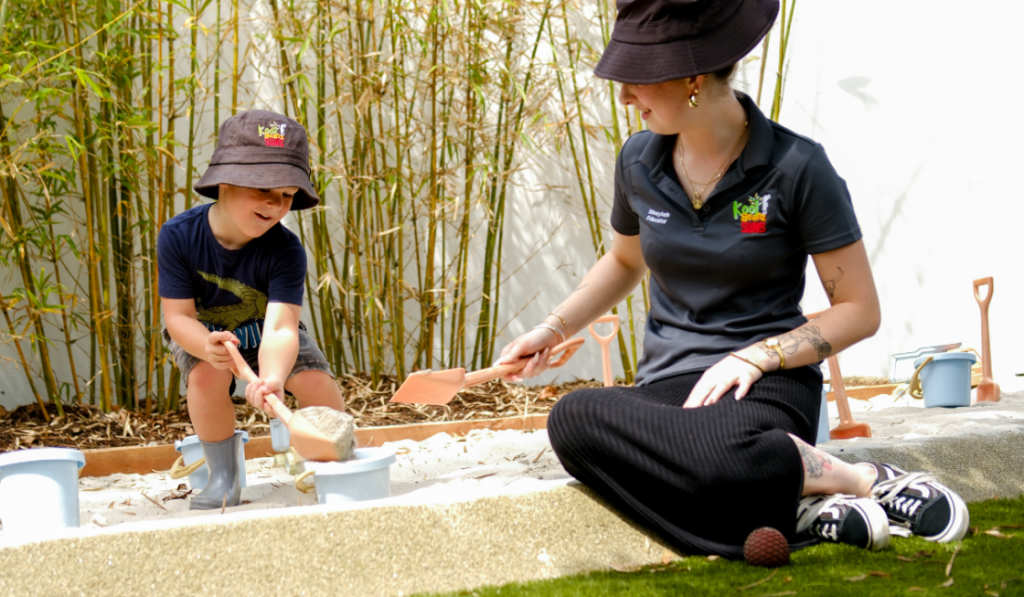
Child-centred environments (the design is doing more than you think)
Good design in early learning isn’t décor. It’s pedagogy made physical.
At the practical level, child-centred spaces lean on a few non-negotiables: clean sightlines, zones that don’t clash with each other, and materials that can be used ten different ways depending on who’s holding them. In a quality Southport early learning centre, you’ll see environments built for agency not performance.
Look, the biggest giveaway is this: children can start meaningful activity without asking an adult for permission.
That doesn’t happen by accident.
A well-built room usually has:
– Clear “yes spaces” where children are allowed to touch, move, build, and test ideas
– Furniture scaled to children, not mini versions of adult spaces
– Defined but flexible zones (construction isn’t wedged next to quiet reading unless someone wants daily chaos)
– Sensory regulation options: soft lighting corners, textured tools, quieter retreats (because not every child copes with a high-volume room)
Equity shows up here too. Cultural relevance isn’t a poster on the wall. It’s reflected in books, home languages, food conversations, family photos, music, and the assumption that every child belongs without needing to “fit” first.
One-line emphasis, because it’s true:
A premium environment reduces conflict before it starts.
A day in the centre: play, yes. But not random play.
Some people hear “child-led” and imagine educators standing back while kids run the show. That’s not child-led learning. That’s adult-led neglect.
In strong Southport programs, the rhythm of the day is predictable enough to feel safe, yet open enough to let a child’s obsession with, say, ramps and wheels become an actual learning thread rather than a phase to distract from.
You’ll see long blocks of play, but they’re not empty. They’re observed. Educators track what’s emerging and then nudge it with small provocations: a new material, a question, a book placed strategically, a peer pairing that tends to spark collaboration.
Outdoor time isn’t just “burn energy so everyone naps.” The best centres treat it like a second classroom: real risk assessment, climbing choices, loose parts, weather tolerance, and that specific kind of learning kids only do when their whole bodies are involved.
Then the day slows down again. Calmer transitions. Reflection. A chance to regulate.
Now, this won’t apply to everyone, but: children who struggle with transitions often improve dramatically when the day is structured like a rhythm rather than a timetable.
If a centre doesn’t individualise learning, it’s not premium.
I’ll stand by that.
Individual plans aren’t a luxury feature. They’re basic professionalism. The difference is how they’re done.
In better settings, personalisation starts with close observation. Not a checklist shoved into a folder, but real noticing: what a child returns to, avoids, masters quickly, finds socially tricky, or uses to self-soothe. That becomes the spine of the plan.
From there, the centre builds a learning pathway that’s coherent:
– interests → intentional experiences
– strengths → leadership opportunities
– emerging skills → small, repeated practice opportunities
– developmental needs → targeted support without labelling the child as “behind”
The tracking matters too, and not in a bureaucratic way. High-quality documentation is short, useful, and tied to decisions. If progress notes aren’t changing what educators do tomorrow, they’re mostly theatre.
In my experience, the centres that get the best outcomes aren’t the ones with the most documentation. They’re the ones where the documentation leads to sharper practice.
Families aren’t “included.” They’re part of the system.
Some centres talk about partnerships and then send the occasional app update. That’s not collaboration. That’s broadcasting.
Real partnerships feel more like co-planning. Families share what’s happening at home (sleep changes, new siblings, languages used, anxieties, delights) and educators use that information to adjust the environment and expectations inside the room. The loop goes both ways.
A solid family partnership model typically includes:
– consistent, low-friction communication channels that don’t overwhelm you
– shared goal-setting that’s actually revisited (not set-and-forget)
– educators translating observations into practical strategies for home, when requested
– a respectful stance that treats parents as experts on their own child
Here’s the thing: trust doesn’t come from friendliness alone. It comes from follow-through. When families see that their input changes practice, confidence spikes.
Safety, wellbeing, nutrition: the “boring” stuff that makes everything else possible
Safety protocols are only impressive when they’re invisible in daily life.
In premium centres, you’ll notice supervision patterns that feel calm, not frantic. Procedures are rehearsed enough that staff don’t freeze when something unexpected happens. Hygiene routines are embedded without turning the day into a constant interruption.
Emergency preparedness is the same. Drills shouldn’t scare children, but they also shouldn’t be pretend. The centres doing it well have clear roles, accessible supplies, and systems that don’t rely on one “strong” staff member being present.
Nutrition, meanwhile, is rarely just about the menu. It’s about habits.
Meals become part of the learning environment: predictable times, calm pacing, hydration built into the day, and space for children to explore food without pressure. And if a centre claims to value inclusion, it will manage allergies, cultural food preferences, and dietary needs with competence rather than inconvenience.
A quick concrete note: Australian childcare nutrition guidance commonly references the Australian Dietary Guidelines and the Australian Guide to Healthy Eating (NHMRC, 2013), which centres use to shape balanced meal planning and portioning approaches. Source: National Health and Medical Research Council, Australian Dietary Guidelines (2013).
Quality measurement: outcomes, feedback loops, and the guts to change
Centres love the word “quality.” Fewer centres can explain how they measure it.
A premium approach treats quality like a cycle:
1) observe what children do
2) interpret what it means
3) adjust the environment and teaching
4) check if the adjustment worked
5) repeat, without ego
That requires governance that values actionable data, not paperwork volume. It also requires staff development that is ongoing and specific. Not generic “training days,” but real coaching tied to what’s happening in the room: language scaffolding, behaviour guidance, inclusive practice, risk assessment outdoors, documentation that informs planning.
And yes, leadership matters. A lot. When leaders resource the program properly, educators can focus on teaching rather than survival.
So what sets a premium Southport centre apart?
Some of it is visible: well-maintained spaces, rich materials, steady routines, thoughtful nutrition.
The deeper difference is alignment.
When pedagogy, environment design, family collaboration, safety practice, and continuous improvement all point in the same direction, you get a centre that feels purposeful without feeling rigid. Children lead, but they aren’t left alone in the work of growing up. Educators guide, but they don’t dominate. Families are kept close, not kept informed at arm’s length.
That’s the version of “premium” that actually matters.